
 +48 791-027-207
 drzewkakusek@gmail.com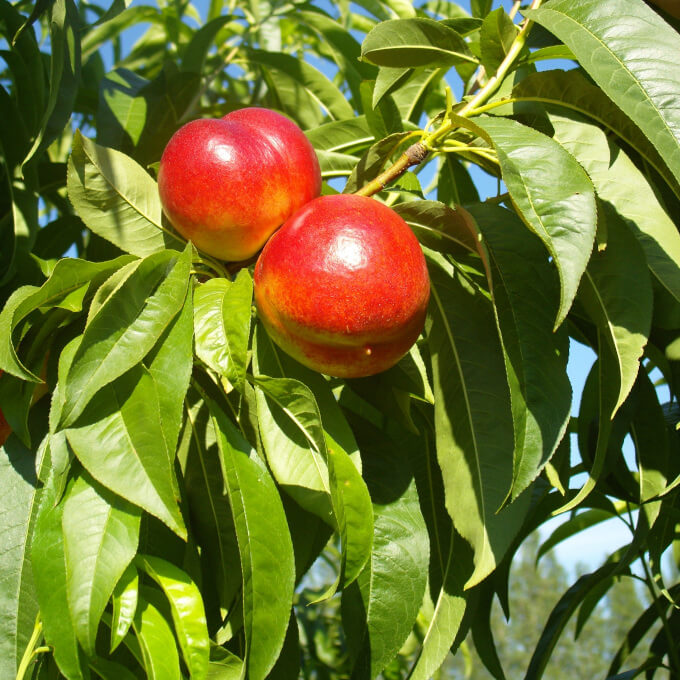
Looking for nectarine tree seedlings? At the Drzewka Kusek nursery we run our own production of fruit trees. Our range includes the varieties: harco and others. Rootstock: peach Rakoniewicka. Retail and wholesale.
The nectarine is a smooth-skinned form of the peach – its cultivation is almost identical, but even more demanding in terms of warmth and protection against leaf curl. It rewards you with exceptionally sweet, aromatic fruit. Below is a practical guide from the Drzewka Kusek nursery.
Nectarine tree seedlings – the most popular varieties
- Harco – early, relatively frost-hardy and productive; recommended for Polish conditions.
- Fantasia – large, yellow-fleshed, aromatic fruit.
- Independence – self-fertile, with red skin and tasty flesh.
- Nectared – proven, productive varieties with good flavour.
Planning a planting? See the nectarine tree seedlings available from our nursery — the full list of varieties, rootstock choice and how to collect them.
Nectarine tree seedlings – rootstocks and position
The nectarine needs a very warm, sunny and wind-sheltered spot – its flower buds are easily damaged by frost. The soil should be permeable, humus-rich and not too wet.
- Myrobalan plum (seedling) – less demanding as to soil, tolerant of heavier ground.
- Peach seedling – good compatibility and vigorous growth; trees with high heat requirements.
Fertilising nectarines – what is worth knowing?
- In spring – nitrogen fertilisers supporting growth and fruit set.
- In summer and autumn – potassium and phosphorus improving flavour, colouring and shoot ripening before winter.
- It is worth using compost and keeping the soil fertile and permeable.
Excess nitrogen delays shoot ripening and increases the risk of frost damage and disease.
Pruning nectarines – how and when?
Like the peach, the nectarine fruits on one-year-old shoots, so it needs hard annual pruning:
- Prune in spring, at the start of the growing season (once the buds are visible) – wounds heal faster and the infection risk is lower.
- Each year shorten and thin the shoots to encourage the tree to produce new, fruit-bearing growth.
- With a heavy set, thin the fruitlets – those left will grow larger and sweeter.
Nectarine diseases and how to prevent them
- Peach leaf curl – the most serious disease, to which the nectarine is very susceptible; copper sprays in autumn and early spring, before bud break, are key.
- Brown rot – rotting fruit and wilting shoots; remove mummified fruit.
- Powdery mildew and shot hole – a well-ventilated canopy and copper protection help.
Pests
- Aphids – deform leaves and weaken young growth.
- Spider mites – cause silvering and drying of leaves, especially in hot weather.
- Codling moth – damages the fruit.
Regular monitoring, supporting natural enemies and timely protective treatments all help.
Nectarine tree seedlings – care calendar
- Spring: pruning, a spray against leaf curl before bud break, nitrogen feeding.
- Summer: watering in drought, thinning fruitlets, pest monitoring.
- Autumn: harvest, potassium-phosphorus feeding, a copper spray after leaf fall.
- Winter: frost protection, whitewashing trunks, checking tree condition.