


Rootstocks for fruit trees and scion orchard
Why is the rootstock so important?
Above all, the rootstock (the root system onto which the cultivated variety is grafted) determines the vigour, yield quantity and quality, the time of coming into bearing, frost and drought tolerance, as well as site requirements. Therefore, choosing the right rootstock allows you to match the tree to your soil and planned training system – from intensive plantings to traditional orchards and home gardens. What is more, a good choice reduces the risk of cultivation mistakes and makes maintenance easier.
Benefits of a well-chosen rootstock:
- Firstly, a faster start of bearing and stable yields.
- Secondly, easier pruning and harvesting, because the trees are lower and more compact.
- In addition, better adaptation to weaker soils or dry sites.
- Finally, greater longevity and better overall health of the orchard.
Types of rootstocks – which one to choose?
By vigour
- Dwarf – for intensive plantings and small gardens; require supports and often irrigation, come into bearing earlier.
- Semi-dwarf – a compromise between productivity and lower requirements; good for commercial and hobby orchards.
- Vigorous – taller trees with a strong root system; lower soil requirements, wider spacing.
Examples of popular rootstocks (for information)
- Apple: M9, M26 (weaker), MM106 (medium), A2 (vigorous).
- Pear: quince (various clones) – for weaker-growing forms; for some cultivars an interstem is possible; Caucasian pear – vigorous.
- Sweet / sour cherry: Gisela 5 (weaker), Colt (medium).
- Plum / apricot / peach: cherry plum / myrobalan (more vigorous, tolerant), Wangenheim prune (for plums – medium).
Note: the choice depends on the cultivar and site – we will advise the optimal solution for your planting.
How to choose a rootstock
- Soil and water: on light, dry sites choose stronger or medium rootstocks; on fertile soils you can opt for weaker ones.
- Purpose of cultivation: intensive orchard (small trees, quick harvest) → dwarf/semi-dwarf; traditional orchard and less maintenance → stronger rootstocks.
- Cultivar and training system: check cultivar compatibility with quince (for pears) and plan supports/irrigation when using weaker rootstocks.
Most often we collect scions during the dormancy period (winter/early spring). If needed – after agreement – we can collect them at times adjusted to the grafting technique (e.g. bench grafting, greenhouse). We also secure the material for transport and advise on storage; in particular, we recommend cool conditions, moderate humidity and limited air access.
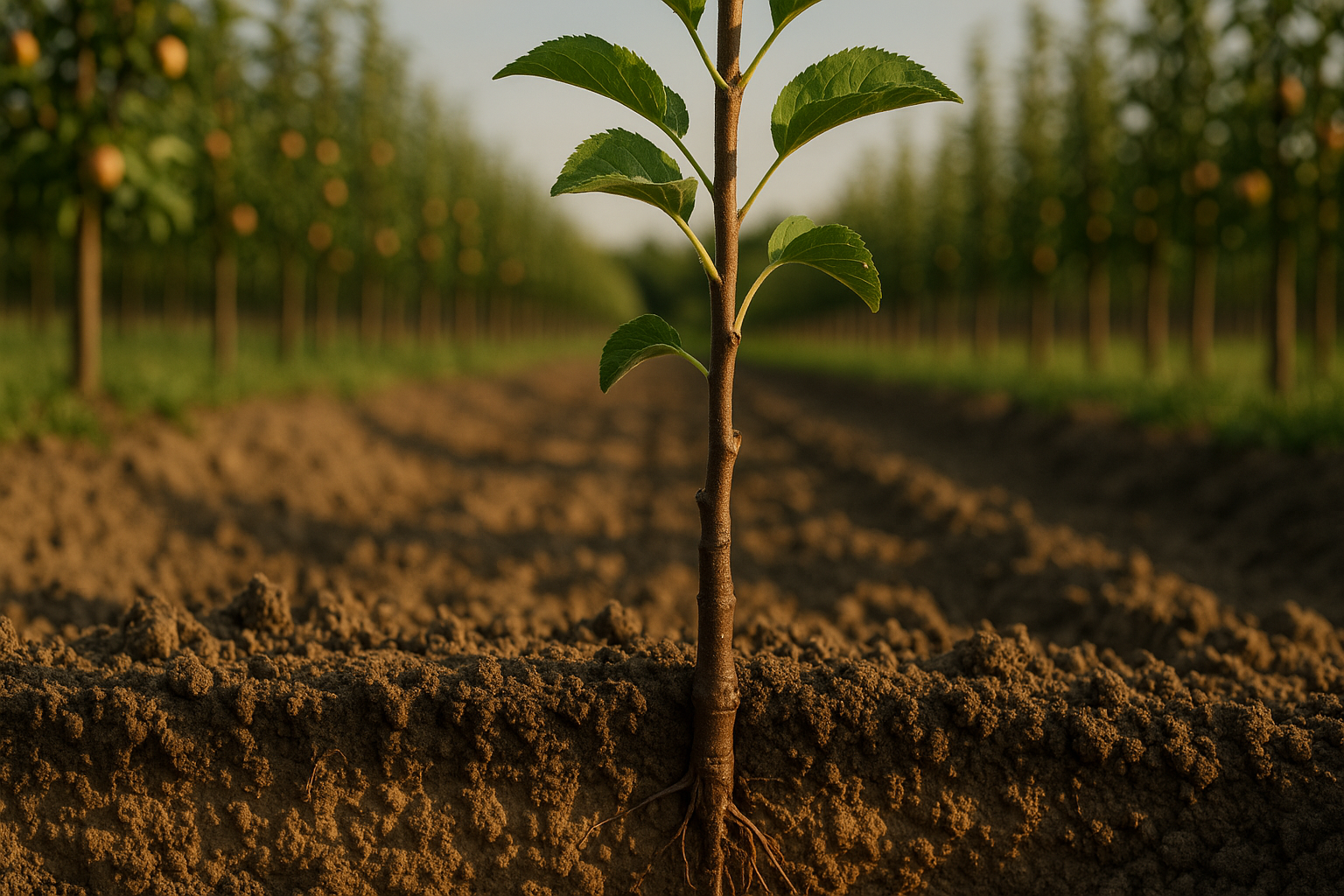
Scion orchard – a reliable source of scions for grafting
A scion orchard is a mother block planted and managed specifically for obtaining scions (shoots) for grafting. Thanks to this, you receive true-to-type, healthy and properly matured material, which translates into a high take percentage and even growth of young trees.
What do you gain by ordering scions from a reliable source?
- True-to-type cultivars and consistency of characteristics.
- Better plant health – material obtained from mother plants with a high phytosanitary standard.
- Optimal cutting and storage time, so that the scions remain viable until grafting.
Timing and fulfilment
We collect scions during the dormancy period (winter/early spring), and also – after agreement – at times adjusted to the grafting technique (e.g. bench grafting, greenhouse). We secure the material for transport and advise on storage (cool, moderate humidity, limited air access).
Frequently asked questions
Dwarf trees come into bearing earlier and are lower (easier care), but more often require supports and water. Vigorous trees cope better with poorer soils, but come into bearing later.
No – some cultivars require an interstem to improve compatibility and the longevity of the tree. We will advise you when this is needed.
In a cool place (usually 1–3°C), at moderate humidity – e.g. in moist sawdust or paper, in a sealed package that prevents drying out.
Most often in the winter period (plant dormancy), with sufficient advance before the planned grafting date.
Let’s match your orchard with the right rootstocks
Planning new plantings or top-grafting? Tell us what soil conditions and growing goals you have – we will prepare tailored rootstocks and reliable scions from our scion orchard. This way you get uniform, healthy material and a start without compromises.