
 +48 791-027-207
 drzewkakusek@gmail.com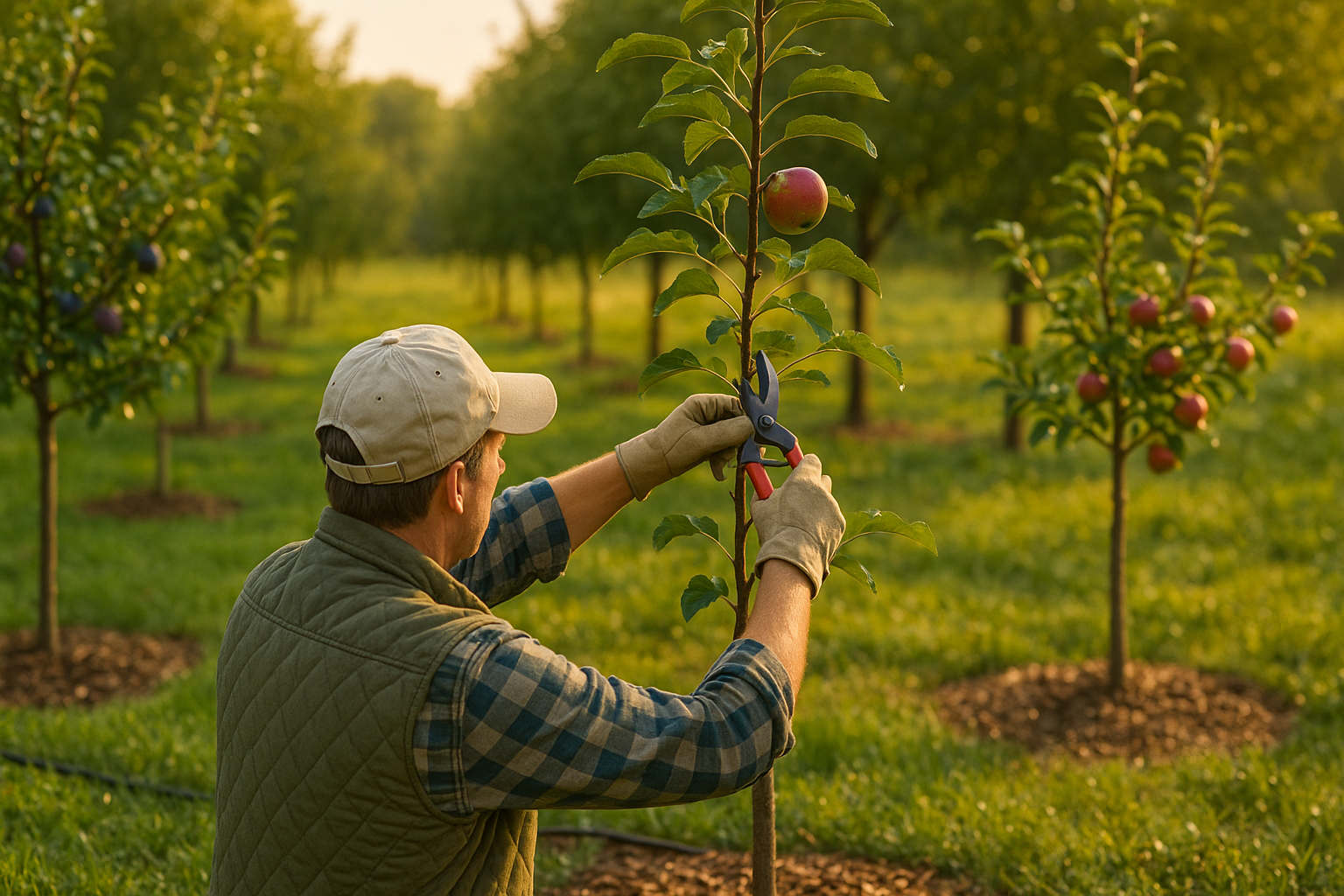
Looking for apple tree seedlings? At the Drzewka Kusek nursery we run our own production of fruit trees. Our range includes the varieties: idared, szampion, gala, gloster, golden delicious, lobo, jonagold, szara reneta and oliwka żółta. Rootstocks: M7, P14, M26, M9. Retail and wholesale.
Apple tree seedlings – the most popular varieties
- Idared – large, red apples that keep exceptionally well.
- Szampion – juicy fruit with a sweet-and-sour flavour.
- Gala – a delicate, sweet taste with a red-and-yellow blush.
- Gloster – disease-resistant apples, red and green in colour.
- Golden Delicious – sweet yellow apples, ideal for eating fresh and for preserves.
- Lobo – juicy red fruit.
- Jonagold – large apples with a balanced sweet-and-sour flavour.
- Szara Reneta – aromatic apples, excellent for preserves.
- Oliwka Żółta – a less common but remarkable old variety with a distinctive taste.
Planning a planting? See the apple tree seedlings available from our nursery — the full list of varieties, rootstock choice and how to collect them.
Apple tree rootstocks – the key to tree size and health
- M7 – a medium-sized tree, resistant to disease.
- P14 – medium vigour, suited to more densely planted orchards.
- M26 – a dwarfing rootstock that makes harvesting and intensive growing easier.
- M9 – very dwarfing, ideal for small orchards and intensive production.
Fertilising apple trees – what is worth knowing?
The right feeding programme is essential for the health of the tree and the quality of the fruit:
- In spring, apply nitrogen fertilisers, which stimulate the growth of shoots and leaves.
- In summer, use potassium and phosphorus fertilisers, which support fruit development and sweetness.
- In autumn, apply phosphorus-potassium fertilisers, which help the tree prepare for winter.
- Organic fertilisers such as compost or manure improve soil structure and nutrient availability.
- Regular liming also matters, particularly on acidic soils.
Pruning apple trees – how and when?
Pruning an apple tree is essential in order to:
- maintain the right shape of the tree,
- remove diseased, damaged and surplus branches,
- improve light penetration into the crown,
- increase yields and fruit quality.
Timing:
- Spring (before growth begins) – removing branches damaged over winter and shaping the crown.
- Summer (June–July) – shortening shoots to limit growth and improve fruiting.
- Autumn – autumn pruning is usually kept to a minimum so as not to weaken the tree before winter.
Apple tree diseases and how to prevent them
The most common apple tree diseases are:
- Apple scab – shows as dark spots on leaves and fruit. It is prevented with copper sprays or fungicides.
- Apple powdery mildew – a white coating on leaves and shoots. It can be controlled with sulphur-based products.
- Apple canker – rotting of the bark and wounds. Infected parts of the tree must be removed and protective treatments applied.
- Aphids and other pests – regular checks and insecticide treatments help keep the tree healthy.
Growing apple trees is a rewarding pursuit and a source of healthy fruit. By choosing the right variety and rootstock, feeding and pruning regularly and protecting the tree against disease, you will secure generous crops for many years. An apple tree does need consistent care — but the results are worth it.
Apple tree care calendar
Early spring (March–April)
- Check the condition of the tree after winter – remove damaged and dead branches.
- Carry out formative pruning of the crown.
- Apply preventive sprays, for example copper-based ones.
- Apply nitrogen fertiliser to stimulate growth.
Spring (April–May)
- Watch for the first pests, such as aphids.
- Apply insecticide treatments if needed.
- Water young trees during dry spells.
- Supplementary phosphorus-potassium feeding.
Summer (June–July)
- Summer pruning – shorten shoots to improve access to light and air.
- Monitor and control fungal diseases (apple powdery mildew).
- Water regularly.
Autumn (September–October)
- Harvest the fruit.
- Phosphorus-potassium feeding to prepare the tree for winter.
- Remove fallen leaves and fruit to reduce sources of infection.
- Protect against winter damage – guard the trunk against rodents.
Winter (November–February)
- Check the tree, especially for mechanical damage and disease.
- Light pruning is possible if the weather allows.