
 +48 791-027-207
 drzewkakusek@gmail.com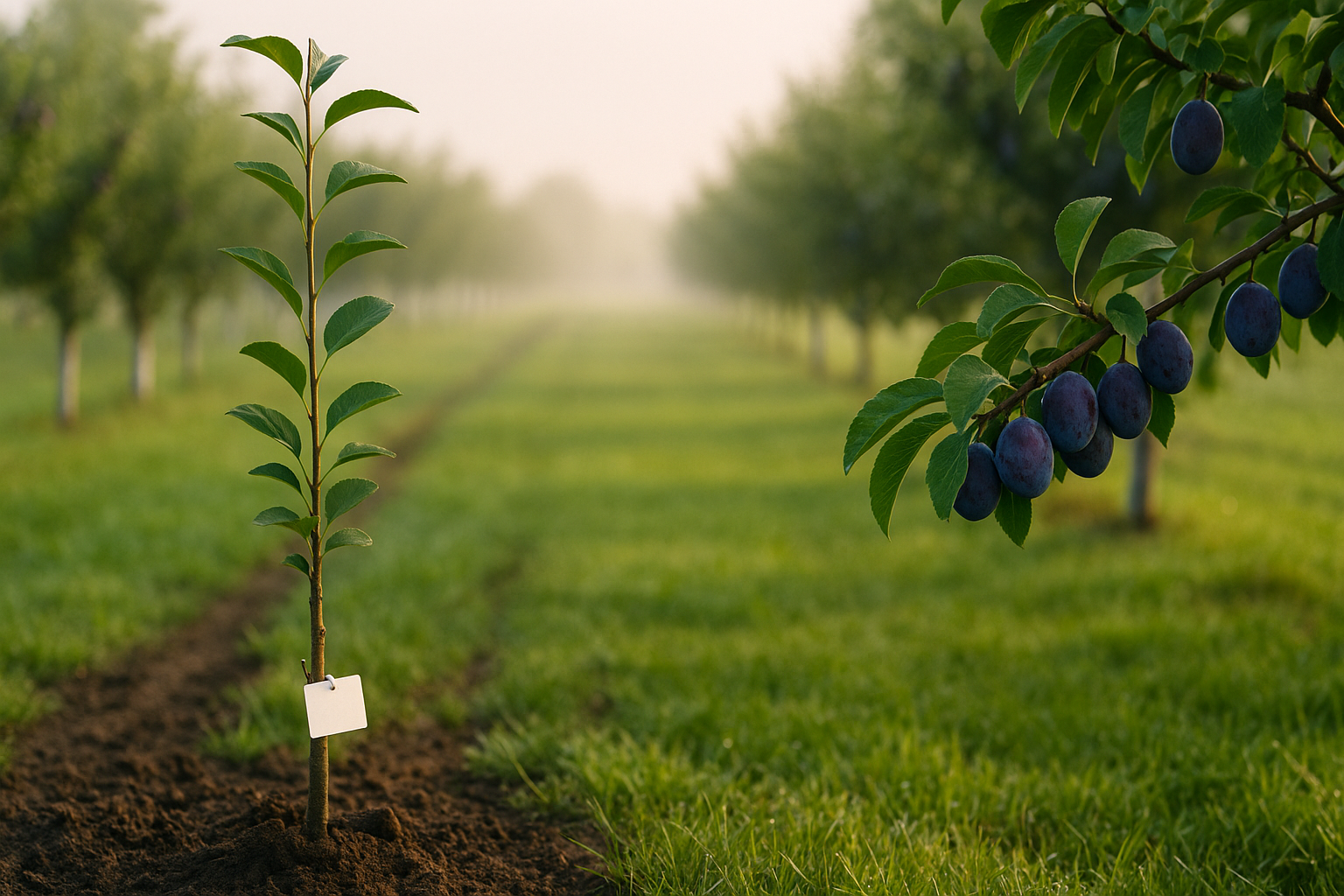
Looking for plum seedlings? At the Drzewka Kusek nursery we run our own production of fruit trees. Our range includes the varieties: prezydent, amers, węgierka zwykła, węgierka dąbrowicka, stanley, rengloda and ulena – healthy and adapted to Polish conditions. Retail and wholesale.
Plum tree seedlings – the most popular varieties
- Węgierka Zwykła (Common German Prune) – classic, sweet flavour; excellent for drying and plum jam.
- Węgierka Dąbrowicka – early, productive, with a very good flavour.
- Stanley – large, dessert fruit; tolerates transport and storage well.
- President – late, very large, with firm flesh.
- Opal – very early, juicy; good for small gardens.
- Herman – early, regularly cropping, with a balanced flavour.
- Čačanska Lepotica – productive, all-purpose, nicely coloured.
- Amers – large, aromatic, popular for commercial orchards.
- Valor – late, sweet, good for both mechanical and hand harvest.
Tip: some varieties are self-fertile (e.g. Stanley, Opal), but most crop better alongside pollinators with a similar flowering time.
Planning a planting? See the plum tree seedlings available from our nursery — the full list of varieties, rootstock choice and how to collect them.
Plum tree seedlings – rootstocks: the key to tree size and health
- Myrobalan (cherry plum) – vigorous growth, high tolerance of poorer soils and periodic drought; may produce root suckers.
- Węgierka Wangenheima (Wangenheim Prune) – medium vigour, quick to come into fruiting, well anchored.
- St. Julien A – medium vigour, recommended for heavier, moister soils; stable cropping.
- Pixy – a dwarfing/semi-dwarfing rootstock; makes pruning and harvesting easier in small gardens, needs more fertile soil and irrigation.
Fertilising plum trees – what’s worth knowing?
- In spring, apply nitrogen fertilisers to stimulate the growth of shoots and leaves.
- From late spring through summer, increase the share of potassium and phosphorus – they support fruit set and ripening, flavour and colour.
- In autumn, use phosphorus-potassium fertilisers to prepare the tree for winter.
- Regularly enrich the soil with organic matter (compost, well-rotted manure) – this improves structure and water retention.
- Monitor the pH – plums grow best at pH 6.5–7.0; on acidic soils plan for liming.
- Avoid over-fertilising with nitrogen in summer – it encourages lush growth at the expense of fruit quality and raises the risk of disease.
Pruning plum trees – how and when?
Aims of pruning:
- maintaining an open, stable crown,
- removing diseased and damaged shoots,
- ensuring light reaches the fruit,
- balancing the crop load and ensuring regular fruiting.
Timing and practice:
- Early spring – light sanitary pruning (remove frost-damaged and broken branches).
- Summer (July–August) and right after harvest – the best time for the main pruning of plums; it reduces “gummosis” and the risk of bark diseases.
- Autumn/winter – avoid heavy cuts, especially on frosty days; wounds heal more poorly.
- Train the crown as a spindle or an open form, with 2–3 tiers of branches; thin out the centre of the crown regularly.
Plum diseases and how to prevent them
- Brown rot (Monilinia) – wilting blossoms and rotting fruit; prevention: thinning the crown, prompt removal of “mummies”, fungicide treatments during risk periods.
- Plum pox (Sharka, PPV) – a virus causing deformities and spots on the fruit; prevention: healthy nursery stock, removal of infected trees, control of aphid vectors.
- Silver leaf – silvery discolouration of leaves, dieback of branches; prune in summer, protect larger wounds with grafting paste.
- Bacterial canker / bark necrosis – wounds, gum exudation; avoid pruning in unfavourable conditions, disinfect tools.
Pests:
- Plum sawfly – mass dropping of fruitlets; use traps and treatments timed to the flights.
- Plum fruit moth (Grapholita funebrana) – maggoty fruit; monitor flights (pheromone traps), apply treatments at the recommended times.
- Aphids, spider mites – check regularly, support beneficial insects, and if needed use products recommended for plums.
Growing plums is a rewarding adventure and a sure source of healthy fruit. Match the varieties to the site and pollination, choose the right rootstock, look after balanced fertilising, prune at the right time and prevent disease – and the tree will reward you with abundant crops for many years.
Plum tree seedlings – a care calendar
Early spring (March – April)
- Assess the condition after winter, remove frost-damaged shoots.
- Gentle sanitary pruning; protect wounds >1–2 cm with paste.
- Copper/control spray during periods of bark-disease risk.
- Starter nitrogen fertilisation.
Spring (April – May)
- Monitor aphids, sawfly and blossom diseases; treat if needed.
- Water young trees during drought.
- Top up phosphorus-potassium fertilisation.
- Consider thinning fruitlets if flowering is very heavy.
Summer (June – July)
- Summer thinning cut; remove water sprouts and crowding shoots.
- Monitor brown rot and the fruit moth; treat according to forecasts.
- Regular irrigation – limits fruit cracking during drought and after downpours.
Autumn (August – October)
- Harvest at picking maturity (variety-dependent).
- Autumn P-K fertilisation, orchard clean-up (leaves, fruit “mummies”).
- Protect the trunk from animals, whitewash at the turn of autumn and winter.
Winter (November – February)
- Check for mechanical and frost damage.
- Avoid heavy pruning – postpone bigger work to summer.
- Check trunk guards and rodent protection.