
 +48 791-027-207
 drzewkakusek@gmail.com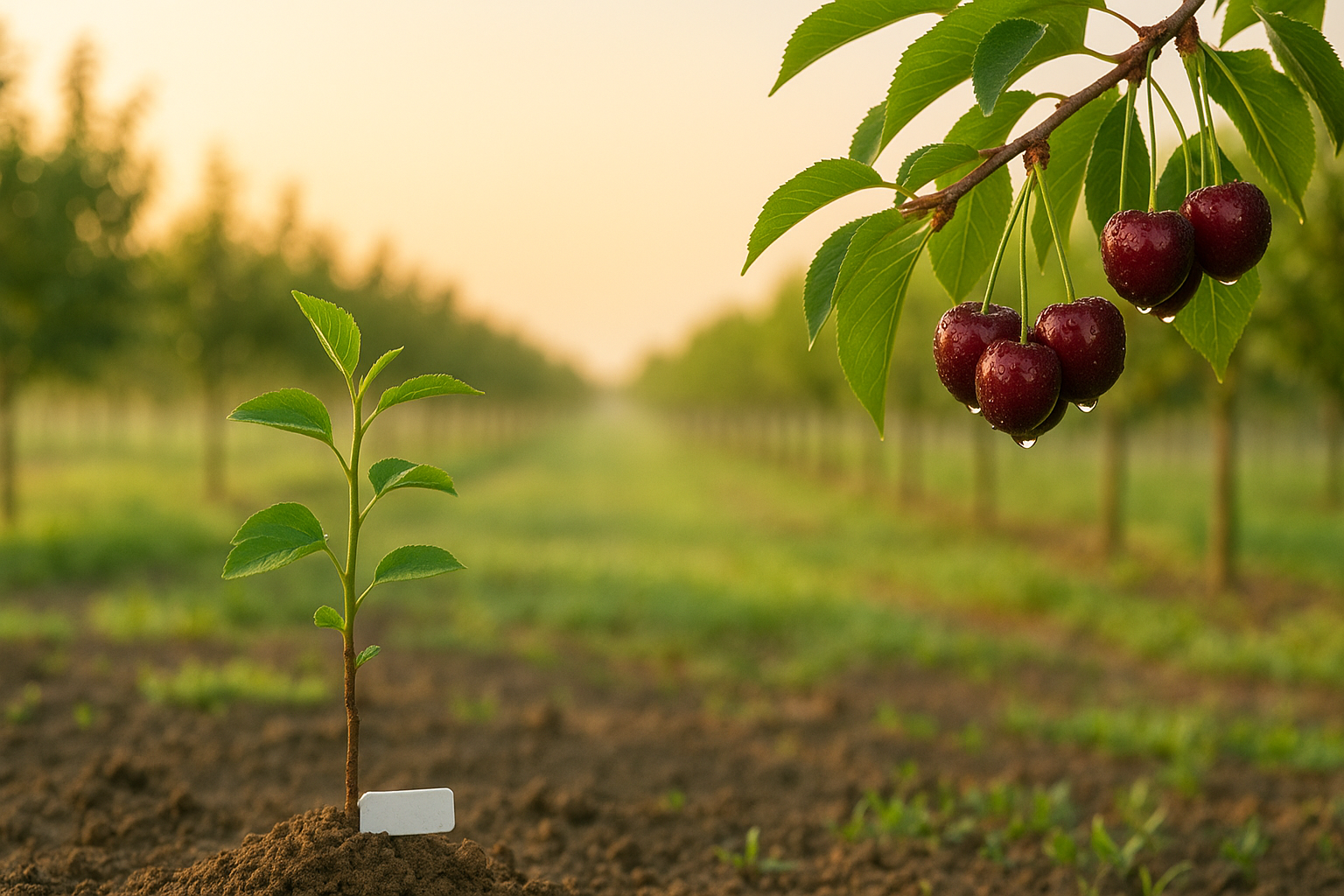
Looking for sweet cherry seedlings? At the Drzewka Kusek nursery we run our own production of fruit trees. Our range includes the varieties: burlat, kordia, regina, summit, sylvia and others. Rootstock: colt. Retail and wholesale.
Sweet cherry seedlings – the most popular varieties
- Burlat – very early, large, sweet fruit; a good start to the season.
- Kordia – mid-late, dark, firm; excellent for the dessert market, needs pollinators.
- Regina – late, very large and firm, transports well; needs pollinators.
- Summit – large, heart-shaped, juicy; productive.
- Vega – yellow-red fruit, mild flavour, popular in gardens.
- Tamara – very large, firm fruit, late harvest.
- Lapins – self-fertile, sweet, reliable in home gardens.
- Stella – self-fertile, early-mid, crops regularly.
- Sweetheart – self-fertile, late, firm; extends the harvest season.
- Hedelfingen (Büttner’s Red) – a classic, juicy, dessert cherry.
Important: most sweet cherries are cross-pollinating – for good fruiting plant at least two compatible varieties with a similar flowering time, or choose one of the self-fertile varieties (Lapins, Stella, Sweetheart).
Planning a planting? See the sweet cherry seedlings available from our nursery — the full list of varieties, rootstock choice and how to collect them.
Sweet cherry seedlings – rootstocks (effect on vigour and requirements)
- F12/1 (wild cherry) – vigorous growth, deep roots, very durable; larger trees, wider spacing.
- Colt – medium vigour, comes into fruiting sooner, tolerates poorer soils.
- Gisela 6 – semi-dwarfing, early and high yields, needs more fertile soil and irrigation.
- Gisela 5 – dwarfing/semi-dwarfing, very early fruiting and easier harvest; requires fertile soil, regular watering and supports.
- Weiroot 72 / 158 – semi-dwarfing, stable, recommended for intensive plantings.
Fertilising sweet cherries – the key rules
- In spring, apply a moderate dose of nitrogen (start of the growing season). Too much N = lush growth, poorer health and a tendency to fruit cracking.
- From late spring through summer, increase the share of potassium and calcium – they improve firmness and flavour and reduce cracking. Phosphorus supports fruit set.
- In autumn, apply P-K (nitrogen-free) fertilisation to prepare the tree for winter.
- Organic matter: compost/manure once every 1–2 years improves structure and water retention.
- Soil pH: optimal pH 6.7–7.2; on acidic soils plan for liming.
- Irrigation: drip irrigation and mulching keep moisture even; avoid wetting the canopy in the pre-harvest period (risk of cracking).
Pruning sweet cherries – how and when?
Aims: a well-lit, stable crown, healthy shoots and regular cropping.
- Best time: summer – after harvest (July–August). This reduces “gummosis” and bacterial infections.
- Early spring: only light sanitary pruning (remove broken, frost-damaged shoots).
- Training: spindle, an open “vase” crown or a low “Spanish bush” form – wide branch angles and an open centre are key.
- Technique: protect larger wounds with grafting paste; disinfect tools.
Sweet cherry diseases and pests – prevention and protection
Diseases:
- Cherry leaf spot – premature leaf drop; protective treatments and removal of infected leaves are important.
- Brown rot (Monilinia) – wilting blossoms, rotting fruit; thin the crown, remove “mummies”, treat during risk periods.
- Bacterial canker / bark necrosis – wounds, gum exudation; avoid pruning in cold/rain, prune in summer, protect wounds.
Pests and other threats:
- Cherry fruit fly (Rhagoletis cerasi) – maggoty fruit; monitor with traps, treat according to forecasts.
- Drosophila suzukii (spotted wing drosophila) – protection and prompt harvest on time.
- Cherry aphid – leaf curling; support natural enemies, use selective products if needed.
- Birds – protective netting/repellent gels during ripening.
Sweet cherry – a care calendar
Early spring (March – April)
- Post-winter check, light sanitary pruning, tool disinfection.
- Starter nitrogen fertilisation, possible copper spray.
- Plan pollinators (add compatible varieties if needed).
Spring (April – May)
- Monitor aphids and blossom diseases; treat according to forecasts.
- Water young trees in drought; top up with P-K.
- If over-loaded – gentle thinning of clusters to improve size (optional).
Summer (June – July)
- Harvest the fruit as it ripens (variety-dependent).
- Pruning after harvest: thinning, shortening shoots, removing infected parts.
- Protection against brown rot and cherry leaf spot; even irrigation (without wetting the canopy).
Autumn (August – October)
- Orchard clean-up: removing leaves and “mummies”.
- Autumn P-K fertilisation; whitewashing trunks in late autumn.
- Protect trunks from hares/rodents.
Winter (November – February)
- Check guards and frost damage; avoid heavy pruning.
- Plan plantings and any additional pollinators for spring.
Are you choosing varieties for a specific location, or do you have a particular soil? Let us know – we’ll suggest the right rootstock, planting spacing and set of pollinators for your garden or orchard.